
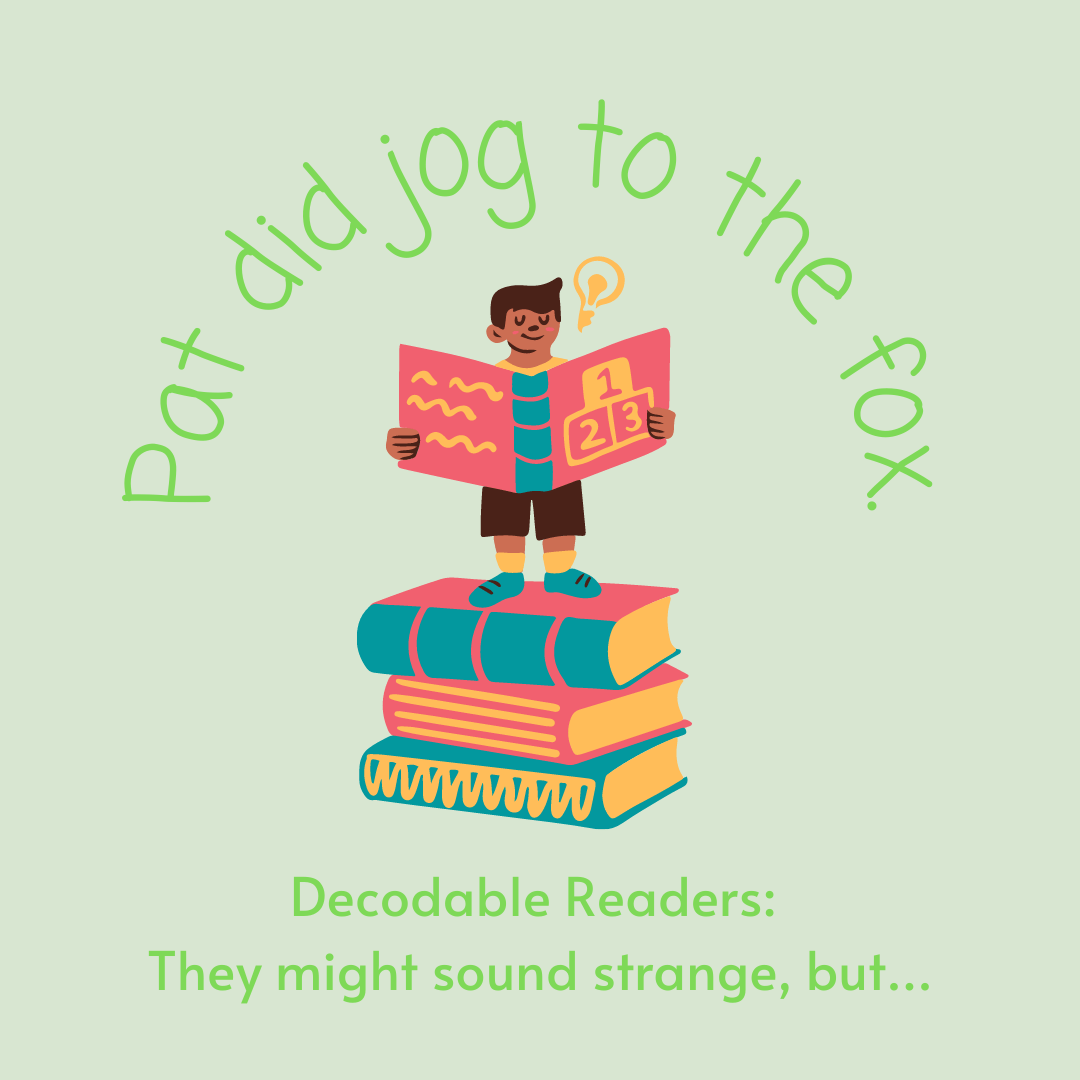

There is one type of book I’m always hunting for — a well-written decodable book. I started this hunt in earnest a few years ago, spurred on by Wiley Blevins’s talk at The Reading League Annual Conference in 2020 (“Decodable Readers: The Good, the Bad, and the Ugly”). He discussed how reading decodable texts is a crucial element of phonics instruction that often gets skipped. Decodable passages are (mostly) limited to phonics patterns and sight words that have been explicitly taught. Since the words in these stories connect to literacy instruction, students learn how to apply phonics patterns in context and develop good reading habits. Also, they can read these stories with relative independence, increasing their confidence in their reading abilities.
Decodable books are especially important early in reading instruction because the texts students read determine which cues they use to read in the future. Students who start off reading mostly patterned, leveled texts learn to guess words based on visual cues. These types of readers often get off to a quick start but hit a wall once texts include unfamiliar, less predictable words. In contrast, decodable texts encourage students to sound out unfamiliar words and to look for patterns they have learned. This reading strategy often takes more time at first, but it also trains the brain to process words like a skilled reader.
With all of these benefits in mind, it might seem surprising that decodable texts are not the universal choice for early readers. The problem is…
most just aren’t very good stories.
I hate to say it because I want my students to get lots and lots of practice reading decodable texts! But it’s true. Decodable texts often include non-standard English sentence structures, low-frequency vocabulary, oversimplified language, rare names, and very little meaningful content (e.g. Sal did jump in the pot.). It’s not easy to create rich, beautifully-written content when you are limited to the patterns that kindergarteners and first graders have covered in phonics class. This is one reason why reading aloud to our children is so important — we can share stories that our children cannot yet access with their own decoding skills.
Despite the shortcomings of many decodable readers, they are an essential part of my book collection. Even when I think that a book might not be interesting enough for my students to enjoy, I’ve found that the students typically are so pleased with their ability to read the words on their own that they don’t mind a few awkward phrases and unfamiliar names.
 Developing Readers
Thank you for this article. I use MA Rooney resources in the classroom and part of each lesson is to send home a decodable passage. I recently had a complaint by a parent that the passages are “grammatically incorrect” and ” no one talks this way”, they questioned the benefits of the decoable passages. I shared a link to this article with parents, hoping it would help explain the rationale behind decodeable readers. I certainly appreciate information that supports the truth about how children learn to read. Thank you for all that you do!