
The Simple View of Reading, which has been validated by over 100 scientific studies, shows that reading comprehension is the product of word recognition and language comprehension. Although many students with dyslexia need development of word recognition in particular, Structured Literacy instruction also addresses language comprehension. We explicitly teach our students about syntax and semantics alongside phonology, sound-symbol associations, syllables, and morphology.
When our students start intervention, many of them are only comfortable reading simple texts or are not comfortable reading at all. This means they do not have as much familiarity with the structure of written language as their peers. Most of our students read sentences or decodable stories at the end of each lesson. This gives us the perfect opportunity to talk about sentence structure.
Here are a variety of ways we might help our students explore the syntax of a sentence like “Mitch catches the ball with his left hand.”
- Ask questions. Who catches the ball? What does Mitch do? How does Mitch catch the ball?
- Discuss parts of speech. What is the subject of the sentence? What is the verb?
- Present the sentence one phrase at a time for the student to progressively read. Mitch…Mitch catches the ball…Mitch catches the ball with his left hand.
- Guide the student to read the sentence expressively, selecting their own phrasing.
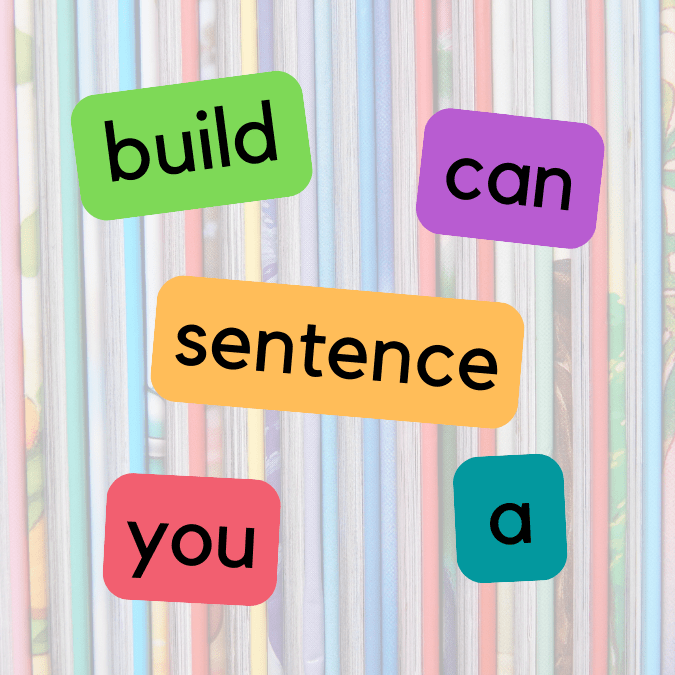
- Give the student the words from the sentence to unscramble. ball Mitch hand his with catches the left
- Provide a fragment for the student to turn into a complete sentence. catches the ball with his left hand
- Challenge the student to combine the sentence with another related sentence. Mitch catches the ball with his left hand. Mitch throws the ball with his left hand.
- Add a simple conjunction and have the student complete the sentence logically. Mitch catches the ball with his left hand because…
Some of these activities also help build reading fluency, and others apply strategies from the Hochman Method to support writing development. The amount and type of syntax instruction ultimately depends on what the individual student needs in his Structured Literacy intervention to become a stronger reader and writer.
Are you concerned that your child is not able to read books at her grade level? Schedule a free consult today, and we can discuss how your child could benefit from Structured Literacy intervention.
 Developing Readers
One thought on “Syntax: Building Strong Sentences”