
Literacy support for students with dyslexia has been under development for over 100 years. Back in the 1920s, a pathologist named Samuel Orton tried to figure out why some children with average and above average intelligence experienced language difficulties similar to his adult patients with brain damage. Since he thought that their left and right brains might not be working together, he proposed using multisensory instruction to engage multiple sections of the brain at once by using kinesthetic learning alongside visual and auditory instruction. He later worked with an educator and psychologist named Anna Gillingham to create an instructional approach for supporting students with reading and writing challenges. Together, they formed a systematic approach that provided students with tools to decode (read) and encode (spell) unfamiliar words. This Orton-Gillingham approach has been used for decades by those teaching students with dyslexia.
Throughout the past century, more researchers have studied how literacy is best taught in general, leading to a consensus that many of the components originally designed to support students with dyslexia are actually beneficial for all students. In 2014, the International Dyslexia Association began using the term Structured Literacy to refer to instruction that aligns with the research about effective literacy instruction. The research indicates that a Structured Literacy approach is likely essential for 50-60% of learners and likely valuable for another 35%. For 5-10%, learning to read may seem effortless, and those students benefit more from other enrichment opportunities. The research behind these numbers was compiled by Nancy Young in 2012 and updated in 2021.
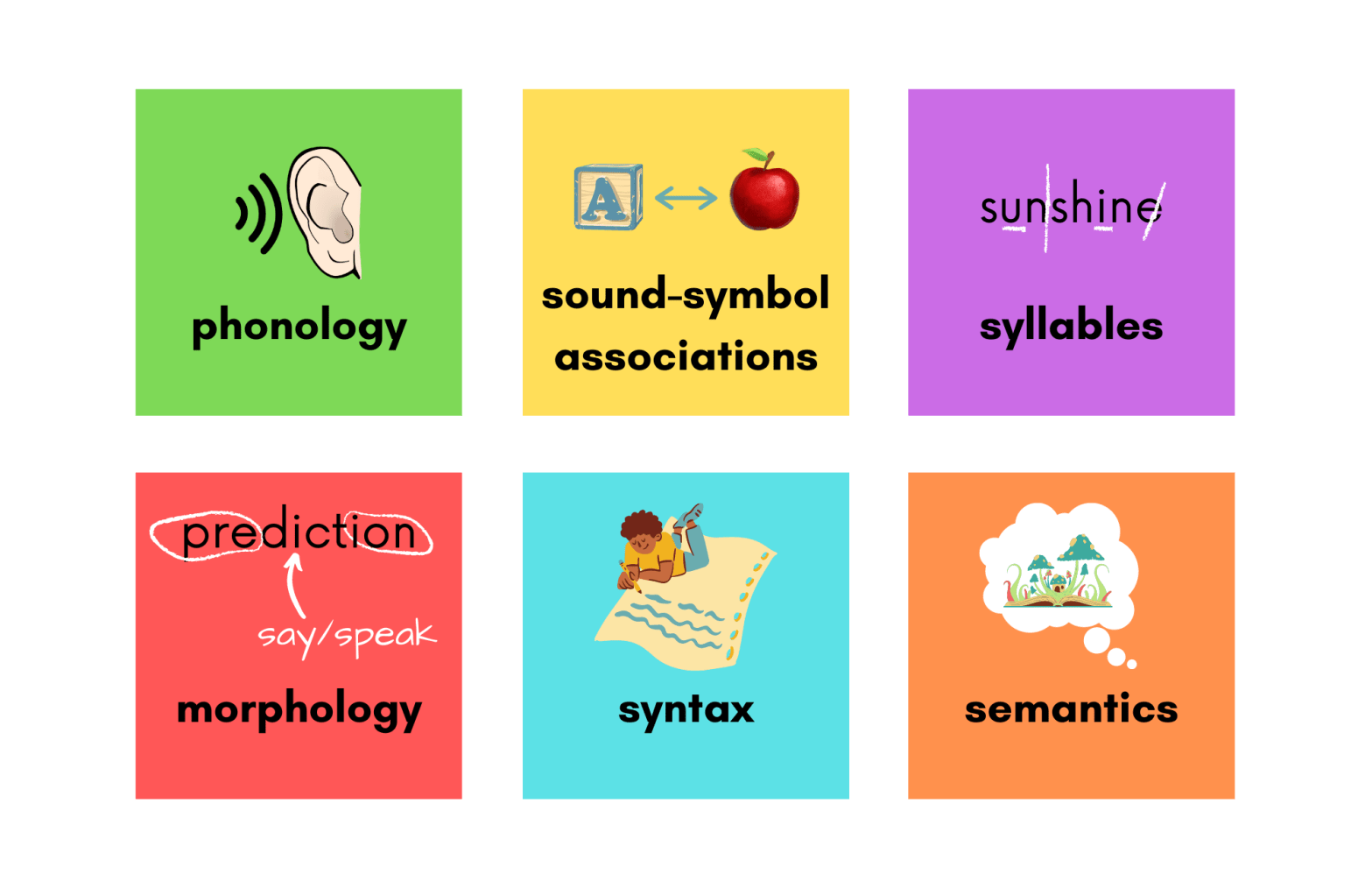
The content of Structured Literacy instruction includes the following:
- phonology
- symbol-sound associations
- syllable knowledge
- morphology
- syntax
- semantics
Structured Literacy instruction follows these principles:
- systematic & cumulative
- explicit
- diagnostic
We have posted about some of these Structured Literacy guidelines already, linked in the lists above. We plan to share information about the remaining components in our upcoming posts, so stay tuned!
 Developing Readers