
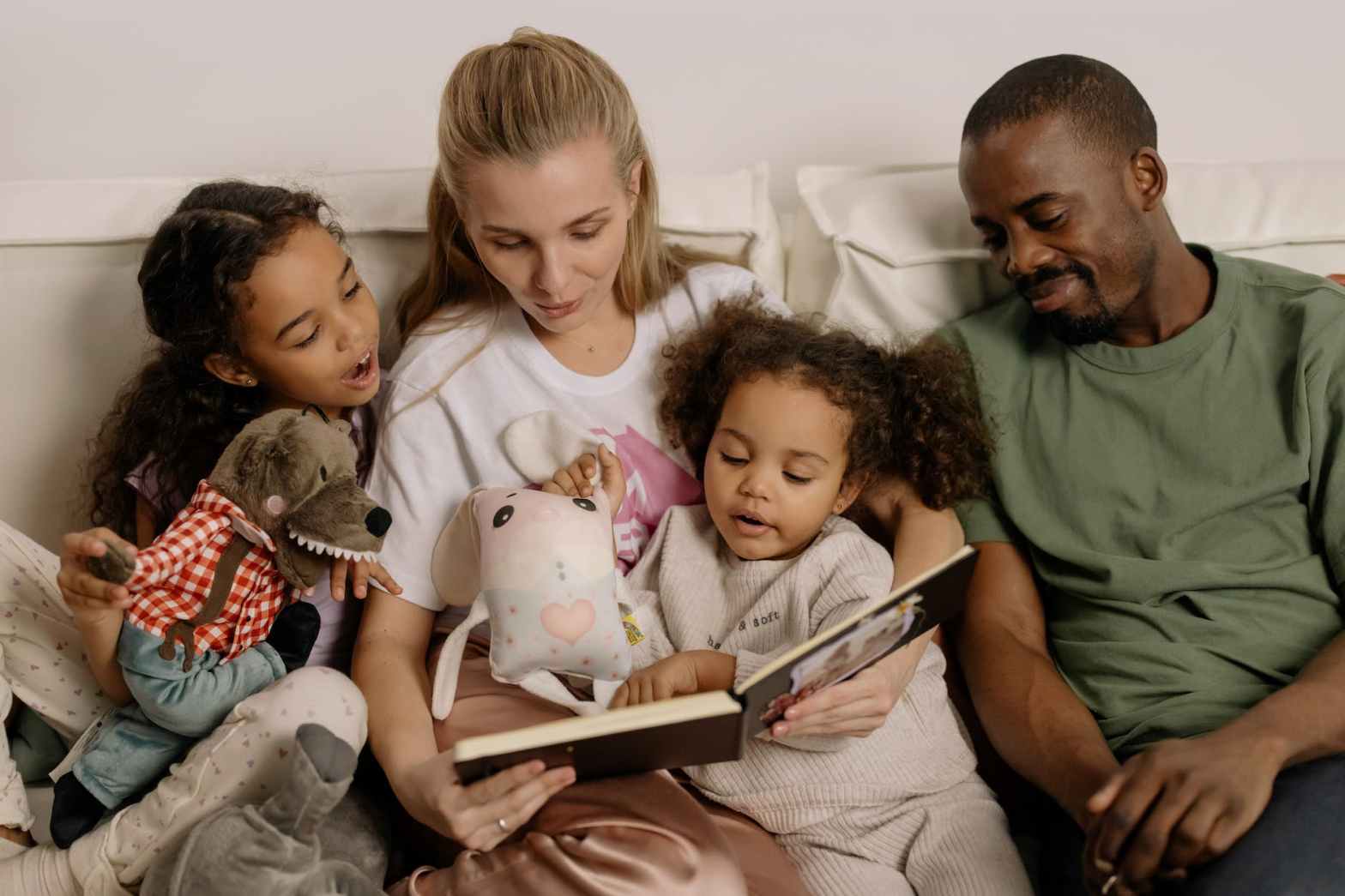

Though most of my time is spent teaching students how to read, it is also important to teach students to want to read. Children without positive reading experiences tend to avoid reading as much as possible, so they need adults to encourage them by modeling and providing enjoyable reading experiences. Reading aloud to kids is an excellent way to nurture a positive mindset toward reading.
Many of the benefits of listening to audiobooks also apply to in-person read-alouds. Plus, read-alouds can become treasured quality time. By setting aside time in our own days to read aloud, we demonstrate to our children that reading is important and that they are important.
Reading can be hard work for many kids, and they typically have to start with very simple stories. When we read aloud to children, we show that this hard work can help them access great stories! Read-alouds give children the opportunity to preview the types of stories they can read for themselves in the future.
For those who are just getting started with read-alouds (or just getting back into them!), here are a few tips from read-aloud expert Jim Trelease:
- Set aside daily time for a story.
- Give the listeners time to settle down and “adjust their feet and minds to the story.”
- Let the listeners doodle to help them focus.
- Adjust your pace and expression to fit the content of the story.
- Add a “third dimension” to the book.*
*In the coming weeks, I will be suggesting some ideas for adding a third dimension to beginner chapter books on Facebook and Instagram. These are experiences that help bring stories to life for our kids.
If you feel like your child is too old, too active, or too distracted for read-alouds, Jim Trelease’s Read Aloud Handbook may make you think again. Check out the preview below.
 Developing Readers
One thought on “Reading Aloud”